
Renewable Consumption Obligation
Accelerating India’s transition to clean energy through mandatory renewable consumption targets
Renewable Consumption Obligation
Renewable Consumption Obligation (RCO) is a rule introduced under the Energy Conservation (Amendment) Act, 2022. It requires certain big consumers of electricity, called designated consumers, to use a specific percentage of their total electricity from clean, non-fossil fuel sources like solar, wind, or other renewable means.
Earlier, this was called Renewable Purchase Obligation (RPO) and was defined under the Electricity Act 2003 and the National Tariff Policy of 2016. The difference is that RCO focuses on the actual consumption of renewable energy by certain industries and commercial users.
The required renewable energy consumption can be fulfilled either by directly using renewable energy or by buying certificates called Renewable Energy Certificates (RECs). These certificates are regulated by the Central Electricity Regulatory Commission, as per rules published in 2022.
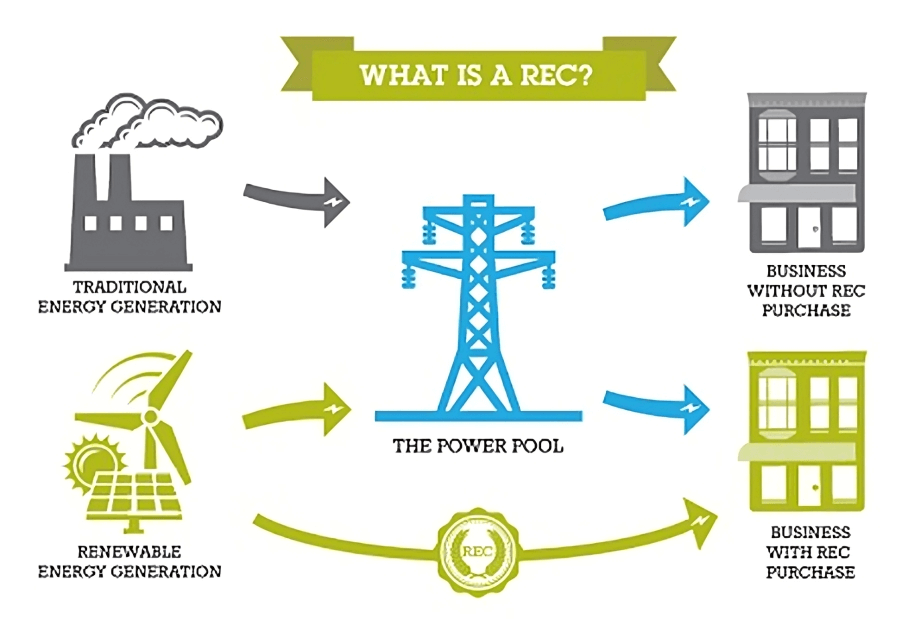

If a designated consumer does not meet the required renewable energy percentage, it is considered non-compliance. In such cases, the law states that penalties will be applied according to Section 26 of the Energy Conservation Act. These penalties can be significant and serve to encourage consumers to meet their renewable energy obligations.
Institutional Framework
The Bureau of Energy Efficiency (BEE), through the Gazette notification, have been entrusted with the responsibility of maintaining data and ensuring compliance of renewable energy utilization by the designated consumer(s) and submit report to the Central Government. This notification incorporates the Non-fossil Consumption Obligation compliance mechanism, encompassing provisions for penalties & adjudication, within scope of the Energy Conservation Act.

Renewable Consumption Obligation
Renewable Consumption are vital tools in the fight against climate change.
Obligated Entities

All electricity distribution licensees and designated consumers, except thermal power plants, who use electricity through captive power plants (CPP) or open access, are included. These designated consumers are specified under the Energy Conservation Act and mainly come from energy-intensive industries. They are identified because their annual electricity consumption is above a certain limit set by the Bureau of Energy Efficiency (BEE) under section 14(e) of the Energy Conservation Act.
Compliance Targets
Target for DISCOMs
The target for non-fossil energy consumption has been set for all electricity distribution licensees (DISCOMs), based on the amount of electricity they supply to consumers within their respective areas. The specific targets are outlined in the table below:
| Year | Wind renewable energy |
Hydro renewable energy |
Distributed renewable energy |
Other nonfossil energy |
Total nonfossil energy |
|---|---|---|---|---|---|
| 2024-25 | 0.67% | 0.38% | 1.50% | 27.35% | 29.91% |
| 2025-26 | 1.45% | 1.22% | 2.10% | 28.24% | 33.01% |
| 2026-27 | 1.97% | 1.34% | 2.70% | 29.94% | 35.95% |
| 2027-28 | 2.45% | 1.42% | 3.30% | 31.64% | 38.81% |
| 2028-29 | 2.95% | 1.42% | 3.90% | 33.10% | 41.36% |
| 2029-30 | 3.48% | 1.33% | 4.50% | 34.02% | 43.33% |
Target for Designated Consumers
The non-fossil energy consumption target for all designated consumers who procure electricity through Captive Power Plants (CPP) or Open Access-based on the portion of their total electricity consumption that comes from sources other than the distribution licensee is provided in the table below.
| Year | 2024-25 | 2025-26 | 2026-27 | 2027-28 | 2028-29 | 2029-30 |
|---|---|---|---|---|---|---|
| Target | 29.91% | 33.01% | 35.95% | 38.81% | 41.36% | 43.33% |
Renewable Consumption Obligation
As an empanelled Accredited Energy Auditor (AEA) agency, our scope for the Renewable Consumption Obligation (RCO) Verification Audit includes:
Compliance Verification
Ensuring that the plant adheres to the Ministry of Power (MoP) Notification on RCO dated 20 October 2023 and its latest amendments.
Data Collection and Validation
Collecting and verifying total and renewable energy data through document checks, equipment inspection, and discussions with the plant’s energy team.
Audit Execution
Conducting comprehensive audits to assess renewable energy procurement and evaluate compliance with RCO targets for the assessment year.
Reporting
Preparing a detailed report on RCO compliance status, highlighting compliance levels, shortfalls, corrective actions, and trends over recent years.
Certification
Issuing compliance or shortfall certificates (Form D) in line with requirements of the MoP and BEE.
Recommendations
Providing expert suggestions to improve systems for energy data collection, metering, and record-keeping, thereby strengthening transparency and efficiency in RCO compliance monitoring.
Importance of RCO Compliance
The Renewable Consumption Obligation (RCO) is a critical regulatory requirement under India’s energy transition policies, designed to accelerate the adoption of renewable energy across industries. Compliance with RCO is important because:
Supports National Targets
RCO contributes directly to India’s commitment to increase renewable energy in its energy mix, helping meet national and international climate goals.
Reduces Carbon Footprint
By mandating the consumption of renewable energy, RCO helps industries lower their greenhouse gas emissions and environmental impact.
Enhances Sustainability
Compliance demonstrates the plant’s commitment to sustainable and responsible operations, which is increasingly important to stakeholders, customers, and investors.
Regulatory Obligation
Non-compliance with RCO can result in penalties and reputational risks, as adherence is mandated by the Ministry of Power and monitored by the Bureau of Energy Efficiency (BEE).
Energy Security
By diversifying energy sources through renewables, industries reduce dependence on fossil fuels and improve long-term energy security.
Through this audit, we aim to not only verify compliance but also help the plant identify opportunities for continual improvement in renewable energy integration, contributing to both regulatory alignment and sustainable growth.
Our Track and Records in RCO Audit
Below are some of the potential clients for whom we have conducted RCO Audits:
Goa Sponge and Power Limited
Silvertoan Paper Limited, Muzaffarnagar
Nahar Spinning Mills Limited, Unit- Spinning Mill, Mandideep
Jindal Stainless Limited, Hisar
Gallantt Ispat Limited, Gujarat
Nandan Denim Limited, Ahmedabad
Nahar Industrial Enterprises Limited, Unit- Spinning 1
Dadra and Nagar Haveli and Daman and Diu Power Distribution Company Limited
Kashmir Power Distribution Company Limited
Get In Touch
Ready to start your DISCOM energy audit? Contact our experts today.
Call Now
Address:-
Corporate Office :
B-801, 8th Floor, Tower-4, Plot No 17, N X One, Kisan Chock, Sector Techzone-4,Greater Noida (West) – 201318 U.P.
Login / E-Store
Get In Touch
- Phone No: 0120-6056188
- Mobile No: 9711591550
- Email: info@ecoenergies.co.in
Corporate Office :
B-801, 8th Floor, Tower-4, Plot No 17, N X One, Kisan Chock, Sector Techzone-4,Greater Noida (West) – 201318 U.P.
Copyright © 2025 Ecoenergies. All Rights Reserved