
Carbon Accounting Audits- Emission factor validation
Carbon Accounting Audits- Emission factor validation
Emission factor validation in carbon accounting audits is a detailed and disciplined process designed to make sure the numbers used to convert activity data—like fuel use or electricity consumption—into greenhouse gas (GHG) emissions are reliable. These checks are usually carried out by accredited third-party auditors, and they’re essential for meeting international standards and establishing trust with stakeholders.

Why Emission Factors Matter
Emission factors (EFs) are at the heart of carbon accounting. They tell you how much greenhouse gas is released for each unit of activity—for example, how many kilograms of CO₂ equivalent (CO₂e) come from burning a liter of fuel or using a kilowatt-hour of electricity.
Using the right emission factors, and applying them correctly, is critical because they directly affect the accuracy of an organization’s reported carbon footprint.
During a carbon audit, validating emission factors is essential for several key reasons:
Credibility and Trust
When a third party verifies the emission factors, it boosts confidence in the reported data. This is especially important for investors, regulators, and customers who rely on accurate information.
Compliance
Making sure the emission factors follow recognized standards and regulatory requirements—such as the GHG Protocol, ISO 14064, SEC rules, or the EU CSRD—helps organizations stay compliant and avoid potential penalties.
Informed Decision-Making
Accurate emission factors give companies a solid foundation for setting realistic emissions-reduction goals and crafting effective strategies to meet them.
Risk Management
Verified data helps organizations better manage risks related to climate regulations, carbon pricing, and potential reputational impacts.
The Emission Factor Validation Process in Audits
The validation of emission factors during a carbon audit follows a structured, standards-based approach—often guided by frameworks like ISO 14064-3.
Scope and Criteria Definition
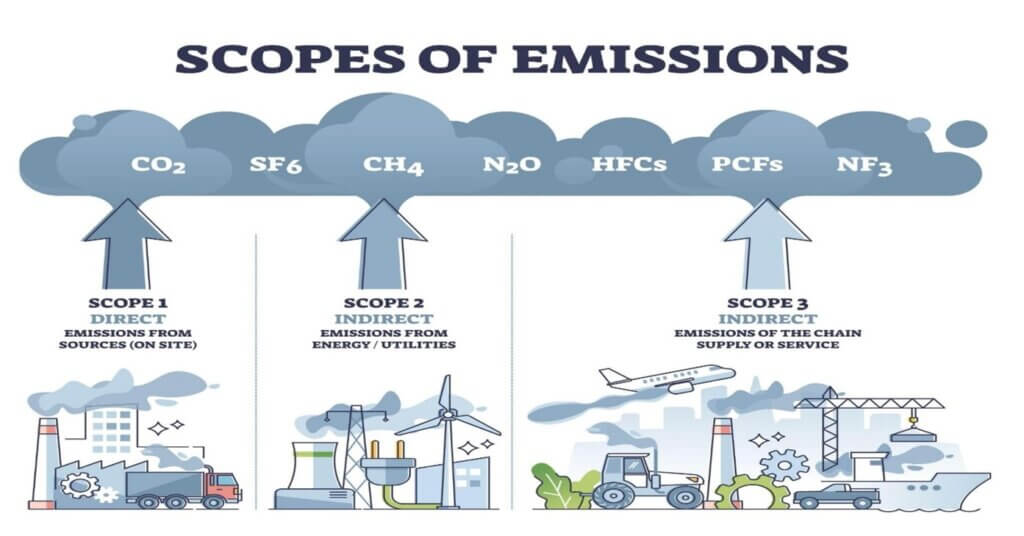
The process begins with the auditor and the client agreeing on what exactly will be verified. This includes defining organizational and operational boundaries (Scopes 1, 2, and 3), the reporting period, and the standards or program rules that will be applied.
They also establish a materiality threshold—the level of error that could influence decisions made by users of the report.
Strategic Analysis and Risk Assessment
Next, the auditor reviews the organization’s operations, context, and GHG data systems to identify potential risks. This includes both:
- Inherent risks, such as limitations in how data is collected, and
- Control risks, related to the organization’s internal procedures and oversight.
This assessment helps the auditor decide where to focus their efforts and how much evidence is required.
Evidence Gathering and Data Trail Testing
This is the most intensive part of the validation and involves collecting strong, reproducible evidence to confirm the emission factors used. Key activities include:
- Source Verification: Checking emission factors from DEFRA, EPA, IPCC, IEA, or LCA databases like Ecoinvent.
- Quality Assessment: Reviewing scientific soundness, documentation quality, publication date, and relevance.
- Methodology Review: Ensuring alignment with activity-based, spend-based, or hybrid accounting methods.
- Recalculation & Cross-Checking: Verifying correct application of emission factors.
- Site Visits: Verifying operational practices, monitoring equipment, and internal controls.
The Role of Emission Factors in Carbon Accounting
Emission factors are the bridge between a company’s activity data (e.g., liters of fuel used, kWh of electricity consumed, or tonnes of material purchased) and the resulting amount of GHG emissions, expressed in tonnes of CO2 equivalent (CO2e). The fundamental equation is:
These factors are essential because direct measurement of emissions for every activity is often not feasible, particularly for indirect (Scope 3) emissions that occur throughout a company’s value chain.

Get In Touch
Ready to start your DISCOM energy audit? Contact our experts today.
Login / E-Store
Get In Touch
- Phone No: 0120-6056188
- Mobile No: 9711591550
- Email: info@ecoenergies.co.in
Corporate Office :
B-801, 8th Floor, Tower-4, Plot No 17, N X One, Kisan Chock, Sector Techzone-4,Greater Noida (West) – 201318 U.P.
Copyright © 2025 Ecoenergies. All Rights Reserved